


The rapid ascent of artificial intelligence, particularly in the form of sophisticated code-generation tools like GitHub Copilot, Amazon CodeWhisperer, and large language models such as ChatGPT, has ignited a profound anxiety within the tech industry and beyond. The question hangs in the air like a persistent hum: Will AI replace programmers? The instinctive, fear-driven answer is a simple “yes.” However, a deeper examination reveals a more nuanced and paradoxical truth: AI will not replace programmers; it will replace programmers who do not use AI. The future belongs not to machines coding in isolation, but to a powerful new symbiosis—the AI-augmented developer.
The Case for Disruption: AI’s Capabilities Are Real
To dismiss the threat is to misunderstand the technology. AI’s encroachment into the programming domain is not speculative; it’s happening daily. Modern AI can:
- Generate functional code from natural language prompts: Describe a function to sort a list of user objects by date, and it will produce valid code in multiple languages.
- Autocomplete lines and entire blocks: It acts as an advanced autocomplete, drastically speeding up the writing of boilerplate and repetitive code.
- Debug and explain errors: Developers can paste an error message and receive a diagnosis and potential fix.
- Refactor and optimize: AI can suggest improvements to make code more efficient, readable, or adhere to best practices.
- Write tests and documentation: Two of the most time-consuming and often neglected tasks can be semi-automated.
This is a seismic shift in productivity. Tasks that once took hours of searching Stack Overflow and trial-and-error can now be accomplished in minutes. From this perspective, it’s logical to assume that fewer human hands will be needed to produce the same volume of code. However, this view conflates “writing code” with the true essence of programming.
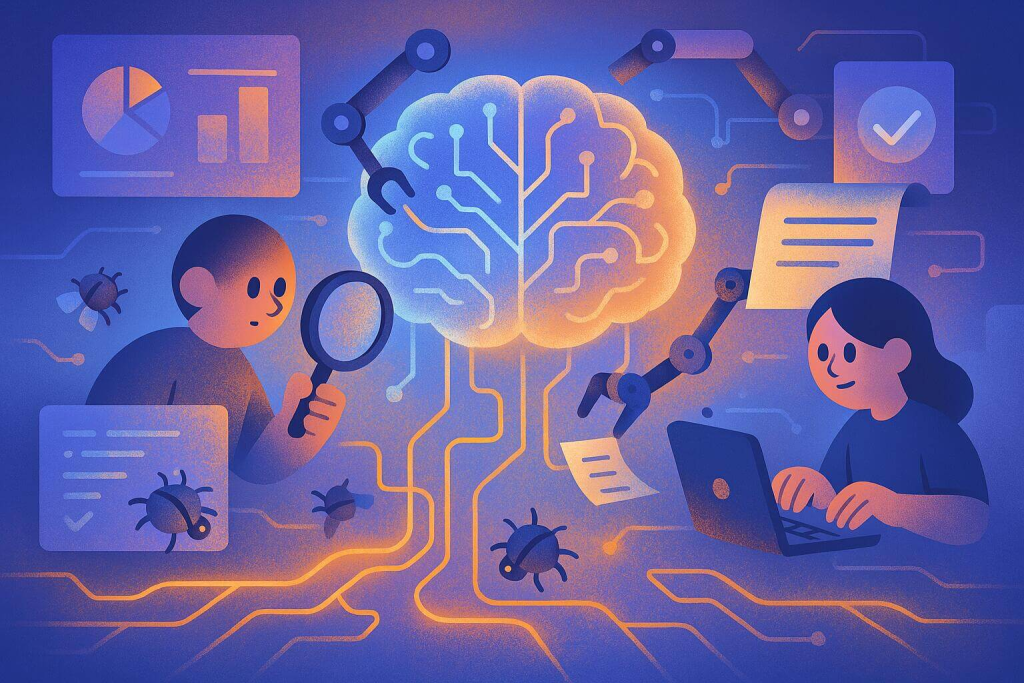
The Human Core: What AI Cannot Replicate (Yet)
Programming is not merely the act of typing syntax. It is a deeply creative and intellectual discipline of problem-solving, design, and abstraction. Here lies the human bastion:
- Understanding Context and Nuance: AI can write a function, but it cannot understand the broader why. Why is this feature important for the user? How does it align with business goals? What are the ethical implications of this data usage? AI lacks the deep contextual understanding of an organization’s culture, user pain points, and strategic vision.
- Architectural Vision and System Design: Conceiving the grand architecture of a complex system—how microservices interact, how data flows, how to balance scalability with maintainability—requires a high-level, abstract thinking that is currently beyond AI. AI excels at building components within a defined framework; it does not create the framework itself.
- Creative Problem-Finding and Ingenuity: The most valuable work often begins not with a solution, but with identifying the correct, non-obvious problem. Programmers as innovators and inventors conceive of entirely new paradigms, products, and approaches. AI optimizes within existing boundaries; humans push the boundaries.
- Stakeholder Communication and Requirement Synthesis: Translating the vague desires of a client or product manager into crisp, technical specifications is an act of empathy, negotiation, and iterative dialogue. It involves reading between the lines, asking the right questions, and managing expectations—fundamentally human social skills.
- Judgment, Ethics, and Responsibility: Code has consequences. Decisions about security, privacy, fairness, and algorithmic bias carry immense weight. A human must remain “in the loop,” applying ethical judgment and being accountable for the output of the AI. The AI can suggest a solution; the human must decide if it is the right solution.
The Symbiotic Future: The Rise of the AI-Augmented Developer
The most accurate model for the future is not replacement, but augmentation. Think of it as the evolution from craftsman to powerhouse. The AI becomes the ultimate junior developer, pair programmer, and research assistant, all rolled into one.
- Democratization of Development: AI lowers the barrier to entry, allowing people with domain expertise (a biologist, a financier) to create tools for their fields by describing their logic. This will increase, not decrease, the need for skilled programmers to build and maintain the robust platforms these “citizen developers” use.
- Elevation of the Role: Freed from the tedium of boilerplate and simple bugs, programmers can focus on higher-value tasks: complex architecture, creative innovation, cross-disciplinary collaboration, and strategic planning. Their role shifts “up the stack” towards more design, analysis, and leadership.
- Exponential Productivity Gains: The developer of 2030 will be unimaginably more productive than today. This won’t mean fewer jobs overall; it will mean we can tackle problems of previously impossible scale and complexity—climate modeling, personalized medicine, next-generation infrastructure—creating new markets and demands for software.
- New Specialties Emerge: Just as the web created front-end developers, AI will create new specializations: AI Integration Engineers, Prompt Engineers for code generation, AI Ethics Auditors, and Cognitive Architects who design systems for optimal human-AI collaboration.
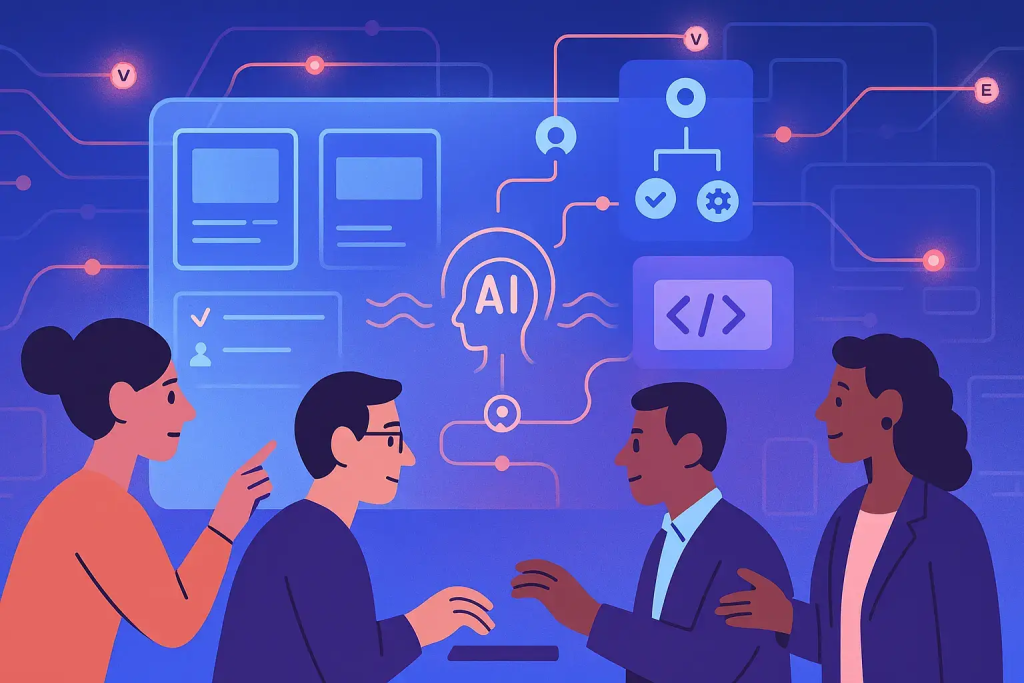
The Inevitable Transition and the Call to Adapt
This shift will be disruptive. There will be a painful transition period where certain mid-level coding tasks are automated, requiring a workforce to reskill. The economic model of software production may change. However, history is instructive. The advent of compilers, high-level languages, and the internet did not kill programming; they exploded its scope and importance.
The imperative for today’s and tomorrow’s programmers is clear: Adapt. The most vulnerable will be those who define their value solely by their ability to write syntax. The most valuable will be those who combine foundational software engineering principles—data structures, algorithms, systems thinking—with the new superpower of AI collaboration.
They will be the conductors, not the musicians of individual notes. They will formulate the brilliant prompts, critically evaluate AI output, design the resilient systems, and apply the irreplaceable human judgment. They will move from coding to orchestrating.
Conclusion: Beyond Replacement, a Renaissance
So, will artificial intelligence replace programmers? It will replace a narrow, outdated definition of the programmer as a mere code typist. But in doing so, it will liberate the profession to fully embrace its true nature: that of designer, architect, innovator, and solver of humanity’s most complex puzzles.
The future is not a wasteland of unemployed developers; it is a landscape where human creativity, guided by machine intelligence, builds things we can scarcely imagine today. The story of AI and programming is not one of obsolescence, but of potential—a partnership that promises not an end to coding, but a renaissance of creation. The question is not whether you will be replaced, but whether you will choose to evolve and wield the new tools that are already at your doorstep.