


In a landmark announcement that signals a new era of computational might for space exploration, NASA has officially declared its most powerful supercomputer, “Athena,” operational. Named for the Greek goddess of wisdom, warfare, and the crafts, this technological titan embodies a strategic leap forward, designed to arm the agency’s scientists and engineers with unprecedented simulation capabilities. Its activation is not merely an upgrade; it is a foundational shift in how NASA will design future missions, understand cosmic phenomena, and navigate the immense complexities of the universe.
A Behemoth of Bytes and Calculations
Residing at the NASA Advanced Supercomputing (NAS) facility at Ames Research Center in California’s Silicon Valley, Athena represents a staggering investment in raw computational power. While NASA is guarded about exact figures for competitive reasons, insiders confirm its performance is measured in exaflops—capable of performing quintillions (a billion billion) of calculations per second. This places it firmly among the world’s elite supercomputers and establishes it as the most potent system dedicated solely to civilian space and aeronautics research.
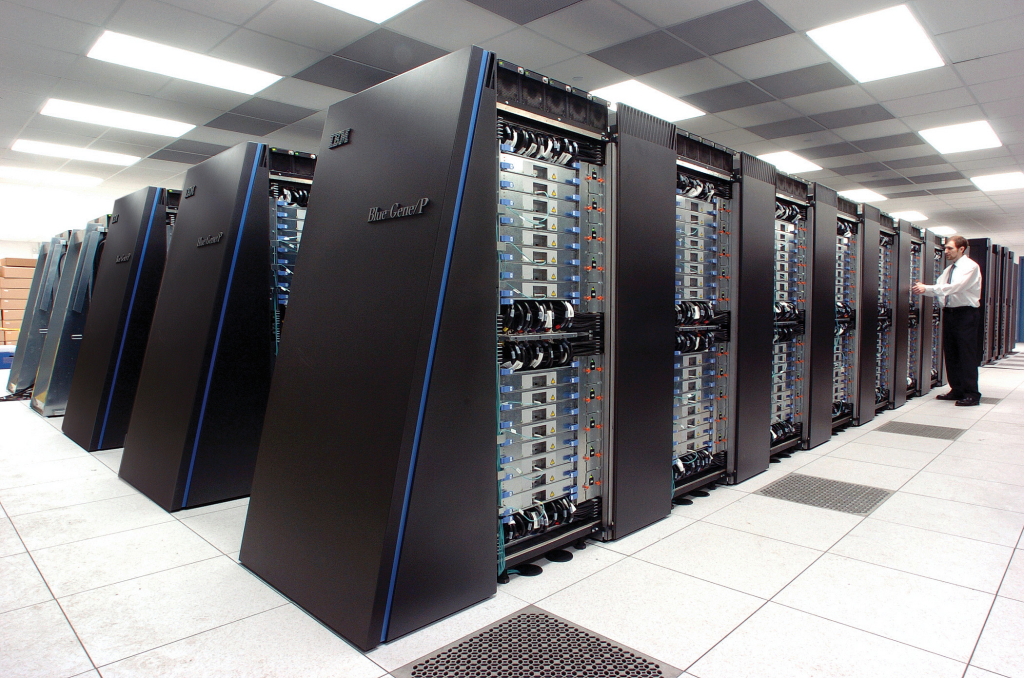
Athena’s architecture is a marvel of modern engineering. It is a heterogeneous system, utilizing a combination of state-of-the-art Graphics Processing Units (GPUs) and traditional Central Processing Units (CPUs). This hybrid design is intentional: GPUs excel at the massively parallel processing required for complex visual simulations and modeling intricate physical systems, while CPUs handle broader computational logic. The system is also equipped with a high-speed, low-latency interconnect fabric, allowing its thousands of nodes to communicate as a single, cohesive brain. Furthermore, it employs advanced liquid-cooling technology, a necessity for managing the immense heat generated by such concentrated power, making it remarkably energy-efficient by supercomputing standards.
The Mission: Simulating the (Nearly) Impossible
So, what does one do with such a formidable machine? Athena’s mandate is to tackle “grand challenge” problems—questions so computationally intensive they were previously considered impractical or impossible to model with high fidelity.
1. Next-Generation Aeronautics: Athena is already running high-resolution simulations for the Sustainable Flight National Partnership. It can model the complex airflows, structural stresses, and acoustic profiles of radically new aircraft designs, like the Transonic Truss-Braced Wing concept. These simulations, which model turbulence at the microscopic level across an entire aircraft in flight, will accelerate the development of quieter, more fuel-efficient commercial airliners, potentially transforming the aviation industry within a decade.
2. The Secrets of Star Birth and Death: In astrophysics, Athena will peer into processes obscured by distance and time. It will run ultra-detailed simulations of supernova explosions, tracing the synthesis and ejection of heavy elements like iron and gold across light-years of virtual space. It will model the chaotic environments around black holes and neutron stars, helping interpret data from telescopes like James Webb and the forthcoming Nancy Grace Roman Space Telescope. By simulating the cosmic web of dark matter that underpins the universe’s structure, Athena will help test the very fundamentals of cosmology.
3. The Mars (and Beyond) Blueprint: Future crewed missions to Mars present a labyrinth of engineering hurdles. Athena is the ultimate testing ground. Engineers can simulate entry, descent, and landing (EDL) for heavy payloads on the Martian surface with unprecedented detail, accounting for thin-atmosphere dynamics and treacherous terrain. It will model life-support system failures, deep-space radiation shielding effectiveness, and even the long-term structural integrity of habitats subjected to Martian dust storms and temperature swings—all in a risk-free digital environment.
4. Earth as a System: Closer to home, Athena will power a new generation of Earth system models. These will integrate oceanic, atmospheric, cryospheric, and land-surface data at a kilometer-scale resolution, dramatically improving our ability to predict regional climate impacts, the behavior of severe weather systems, and the intricate feedback loops in our planet’s climate.
More Than Speed: A Collaborative Portal
NASA emphasizes that Athena is more than just raw speed; it is a scientific collaboratory. The system is integrated with the agency’s vast data archives—petabytes of information from satellites, telescopes, rovers, and probes. Researchers can now place their high-fidelity simulations directly alongside observational data, enabling a powerful cycle of hypothesis, simulation, and validation. This closes the gap between theory and reality faster than ever before.
Furthermore, through NASA’s Science Managed Cloud Environment, researchers across the country will have streamlined, remote access to a slice of Athena’s power. This democratizes high-performance computing, allowing university teams and smaller research institutions to participate in cutting-edge discovery without needing their own multi-billion-dollar infrastructure.
The Strategic Imperative
The activation of Athena is a clear strategic statement. In an era of renewed global competition in space, and with the urgent need for climate solutions, leadership is increasingly defined by information superiority. The nation that can best simulate, predict, and optimize will take the lead in designing the safe, efficient, and groundbreaking missions of tomorrow. Athena ensures NASA retains that edge.
It also represents a critical step toward the digital twin paradigm, where a physical asset—be it a spacecraft, an aircraft, or even an entire planetary environment—has a living, dynamic digital counterpart. This twin can be stressed, aged, and experimented upon in ways impossible in the real world, predicting failures and optimizing performance throughout a mission’s lifecycle.
Conclusion: A New Dawn for Discovery
The announcement of Athena’s operational status is a quiet but profound moment in space science. There will be no thunderous rocket launch, no dazzling public images—at least not immediately. Instead, its triumphs will unfold in research papers, in refined engineering blueprints, and in the confident precision of future missions.
Athena is the unsung architect in the background, running a million complex scenarios so that a rover lands safely, a new wing design soars efficiently, and our theories of the cosmos hold firm under the weight of exquisite simulation. By harnessing this digital incarnation of wisdom and craft, NASA is not just computing the future of exploration; it is meticulously, brilliantly, building it in silicon, one exaflop at a time. The age of cosmic-scale simulation has truly begun.