

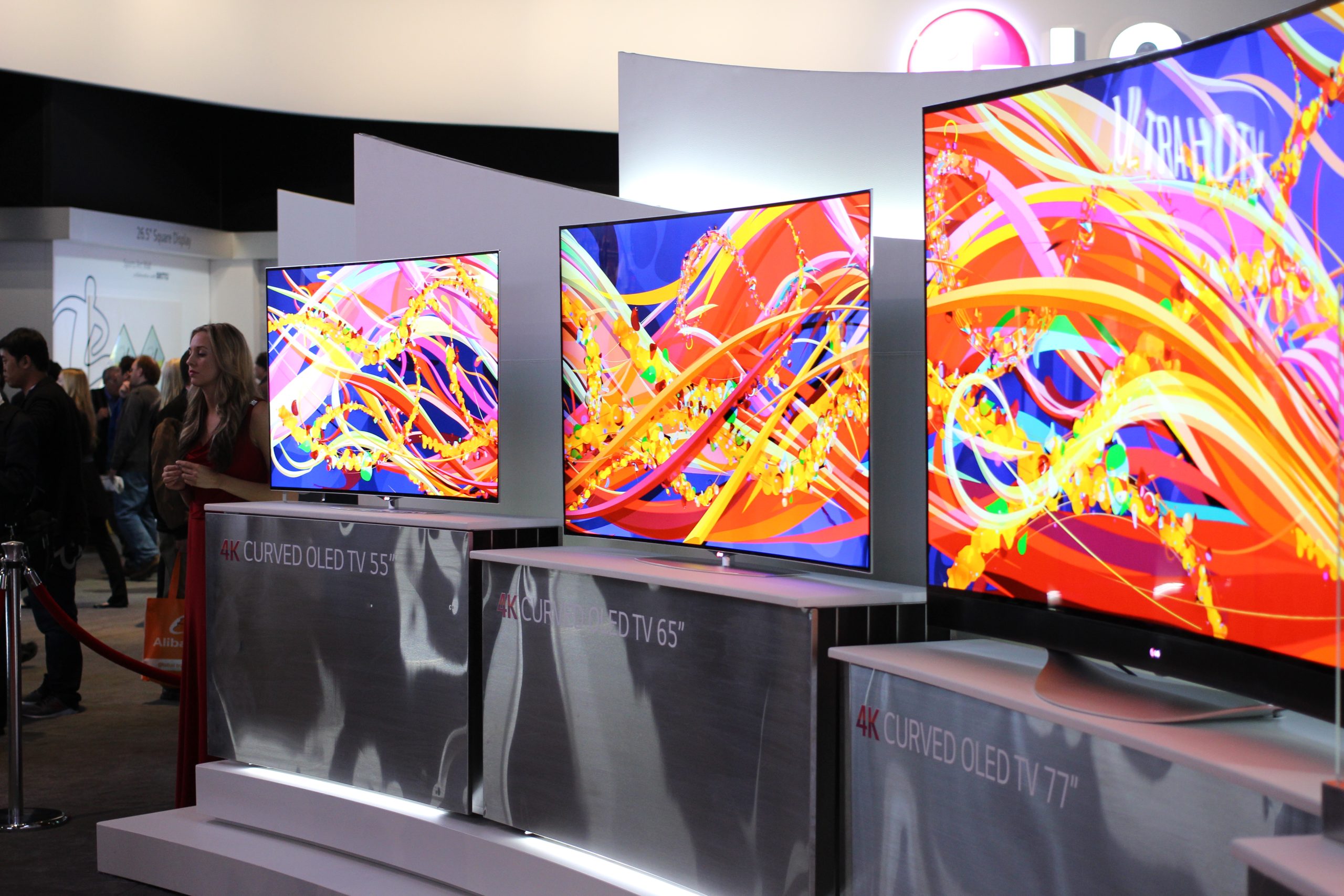
For over a decade, the flat-screen television market has been dominated by one technology: LED-LCD. But in recent years, a formidable challenger has emerged from the shadows, promising unparalleled picture quality and a radical new design. OLED, the buzzword of premium home cinema, is here. But with a significant price gap often separating the two, what are the real differences? Is OLED’s acclaim justified, or does LED still hold crucial advantages? This 1000-word deep dive will dissect the technologies, compare their performance, and help you decide where your viewing loyalty should lie.
The Fundamental Divide: How They Create Light
The core difference is not just in a letter, but in a fundamental philosophy of illumination.
LED TV (More accurately, LED-LCD TV): This is an evolution of the traditional LCD TV. The panel itself is a liquid crystal display (LCD) that does not produce its own light. Instead, it acts as a filter. Behind this LCD layer sits an array of Light Emitting Diodes (LEDs) that provide the backlight. The liquid crystals twist and untwist to block or allow this light to pass through red, green, and blue color filters, creating the image. The key limitation? The LEDs themselves are not the pixels you see.
OLED TV (Organic Light-Emitting Diode): Here, the technology is self-emissive. Each individual pixel is a microscopic organic compound that lights up when an electric current is passed through it. There is no separate backlight layer. When a pixel needs to be black, it simply turns off completely. When it needs to be red, only that red sub-pixel lights up. This fundamental difference is the root of every performance comparison that follows.
The Battle of Performance: Black Levels, Contrast, and Viewing Angles
This is where OLED establishes its legendary status.
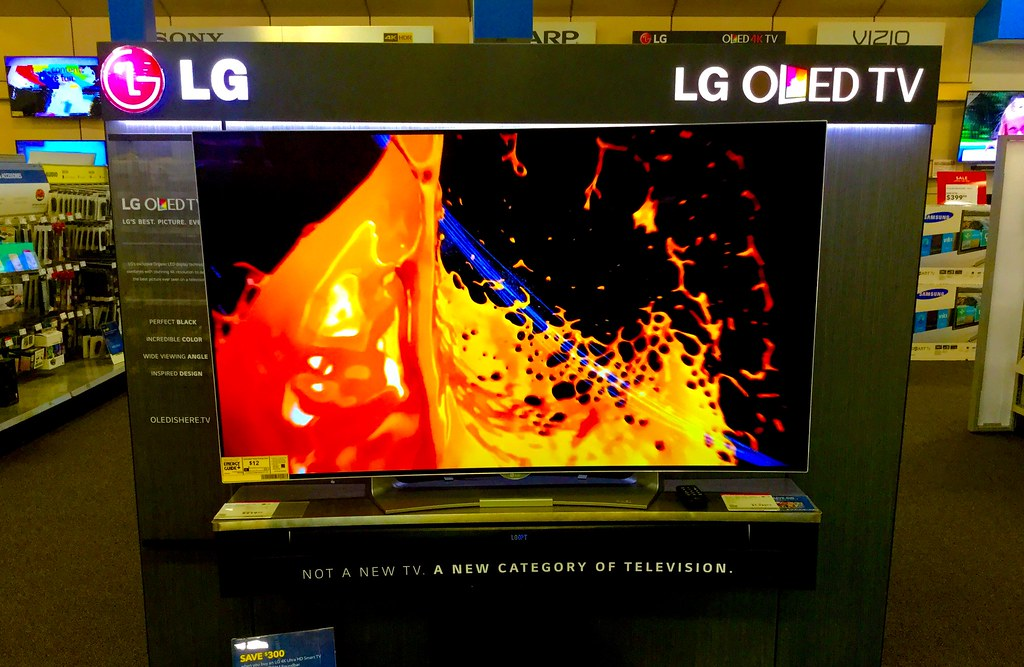
Black Levels and Contrast: If you could only take one metric to judge picture quality, it should be contrast—the difference between the brightest white and the deepest black. OLED is the undisputed champion here. Because its pixels turn off completely, OLED can achieve perfect, true black. This results in an infinite contrast ratio. In a space scene with stars, the black void is as dark as your switched-off screen, making the stars pop with breathtaking intensity.
LED TVs, with their always-on backlight, struggle here. Even with advanced local dimming (where zones of LEDs can dim independently), light can “bleed” or “bloom” into adjacent dark areas, making blacks appear more as dark greys. While high-end LED models with Mini-LED backlights and thousands of dimming zones get impressively close, they cannot match the pixel-perfect precision of OLED.
Viewing Angles: OLED wins again. Due to its self-emissive nature, the image remains consistent, with virtually no color shift or loss of contrast, even when viewed from extreme angles. An LED TV’s picture will often lose saturation, and contrast will plummet as you move off-center, a notable drawback for wide living rooms.
Brightness and Color Volume: This is the one major arena where high-end LED TVs often fight back. LED panels, particularly those with Quantum Dot filters (marketed as QLED or QLED-ED), can achieve much higher peak brightness. This is crucial for overcoming glare in bright rooms and for delivering the eye-searing specular highlights intended by HDR (High Dynamic Range) content. While OLEDs have gotten brighter (with technologies like heatsinks and new panel designs), they can still be outpaced by flagship LEDs in sustained brightness. This higher brightness also allows top-tier LEDs to produce a wider color volume—maintaining saturation at extreme brightness levels.
Response Time and Motion Handling: OLED pixels switch on and off almost instantaneously, leading to a near-perfect response time. This eliminates the motion blur often associated with LCD technology, making fast-paced sports and action movies exceptionally clear. However, this can sometimes introduce a slight stutter in low-frame-rate content (like 24fps movies), which most TVs now mitigate with motion processing. LED TVs have improved greatly but can still show more blurring in rapid panning shots.
Design, Durability, and Gaming
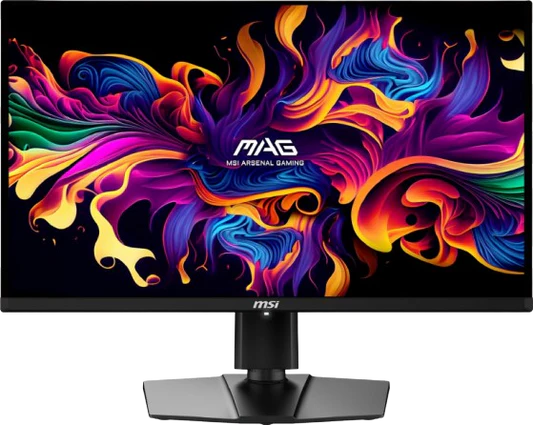
Design: With no need for a backlight layer, OLED panels are incredibly thin—often as slim as a few millimeters—and can be made flexible, enabling stunning, gallery-like designs and rollable TVs. LED TVs are necessarily thicker due to their backlight system.
Screen Burn-in and Lifespan: This is OLED’s most discussed weakness. The organic materials can degrade over time, and if a static image (like a news ticker or a game’s HUD) is displayed for thousands of hours, it can cause a permanent ghostly remnant. Manufacturers have implemented numerous safeguards like pixel shifting and logo dimming, and for varied content viewing, it’s far less of an issue than early models. However, for dedicated use as a PC monitor or for a channel that runs all day, the risk, though small, exists. LED TVs are essentially immune to this issue and have a traditionally longer rated panel lifespan.
Gaming: Both technologies are excellent for gamers, but for different reasons. OLED offers the fastest response time and VRR support, with stunning contrast for immersive games. Newer models feature high refresh rates (120Hz and beyond) and HDMI 2.1 compatibility. The recent introduction of MLA (Micro Lens Array) technology in some OLEDs has also significantly boosted their brightness for HDR gaming. LED TVs, particularly high-refresh-rate QLED models, counter with blinding brightness for HDR highlights and no risk of burn-in for static game elements, making them a potentially safer, and often brighter, choice for marathon gaming sessions.
The Verdict: Which One is Right for You?
Choose OLED if: You are a home cinema purist who watches in controlled lighting. Your priority is reference-level picture quality with perfect blacks, infinite contrast, and wide viewing angles. You value avant-garde design and want the most immersive movie-watching experience possible. You are willing to invest in the premium tier and practice moderate content variety to mitigate long-term risks.
Choose a High-End LED (QLED/Mini-LED) if: Your TV room is flooded with natural light, and you need high brightness to combat glare. You want the most impactful HDR performance with the brightest highlights. Budget is a key consideration, as LED offers exceptional performance at lower and mid-range prices that OLED cannot match. You plan on using the TV for very long, static-content sessions and want absolute peace of mind regarding longevity.
In the end, there is no single “best” technology—only the best technology for you. OLED represents the pinnacle of contrast and cinematic perfection, while modern LED, supercharged with Quantum Dots and Mini-LED backlighting, offers a brilliant, durable, and often more practical alternative. The competition between them has driven innovation to new heights, ensuring that whatever your choice, the view from your couch has never been better.