


We stand at the precipice of the fourth industrial revolution, and its engine is artificial intelligence. Unlike the steam engine or the personal computer, AI is not a single tool but a pervasive force, a cognitive partner capable of learning, reasoning, and creating. Its integration into our economies promises unprecedented efficiency and innovation, but it also heralds a profound and inevitable transformation of the global job market. The future of work will not be a simple story of human versus machine, but a complex reordering—a great reshuffle—where certain roles will fade into obsolescence, while entirely new categories of employment will spring to life.
The Fading Landscape: Jobs on the AI Chopping Block
The first wave of AI-driven displacement is already upon us, targeting roles defined by repetitive, predictable tasks and routine information processing. These are not necessarily “low-skill” jobs, but rather those with a high degree of structural repetition.
1. Administrative and Data-Entry Roles: Positions like data entry clerks, bookkeepers, and certain administrative assistants are highly susceptible. AI-powered software can now extract, categorize, and input data from invoices, forms, and emails with far greater speed and accuracy than humans, 24/7. The role of the middle-manager focused primarily on supervision and report compilation is also evolving, as AI dashboards provide real-time analytics.
2. Routine Customer Service and Telemarketing: While empathy-driven customer service will remain, first-tier support is rapidly being automated. Advanced chatbots and voice AI can handle a vast majority of routine inquiries, troubleshooting, and transactions. Telemarketing and boiler-room sales operations, reliant on scripted interactions, are being replaced by AI-driven outreach that can analyze consumer data and personalize initial contact at scale.
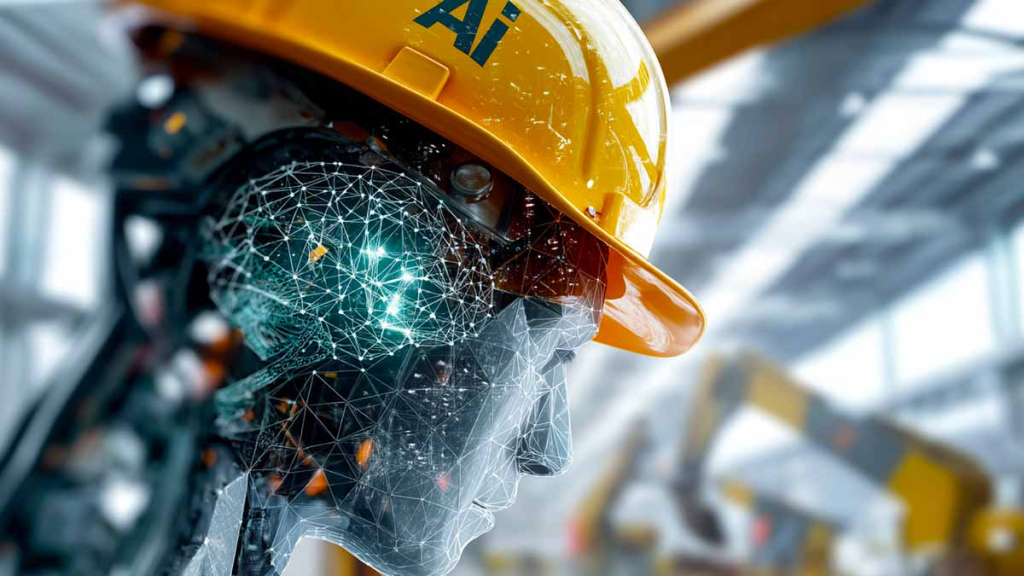
3. Manufacturing and Production Line Jobs: This is a continuation of automation trends, now supercharged by AI. Robots are no longer just pre-programmed arms; they are becoming intelligent systems that can adapt to variations on an assembly line, perform quality control via computer vision, and optimize logistics in real-time, reducing the need for human oversight in predictable physical environments.
4. Certain Mid-Level Analytical Jobs: Roles in fields like basic financial analysis (e.g., junior accountants assessing transactions), paralegal research (document review and discovery), and even some aspects of radiology (initial scan analysis for anomalies) are being augmented and, in some cases, replaced. AI can process millions of documents or images to find patterns or flag issues faster than any human team.
It is crucial to understand that for many of these roles, the outcome is not outright extinction but de-skilling and transformation. The job may survive, but 80% of its routine tasks will be handled by AI, forcing a radical redefinition of the human component.
The Emerging Frontier: Jobs Born from the AI Ecosystem
As AI dissolves old roles, it simultaneously creates new ones. These emerging positions generally fall into three categories: those that build AI, those that explain, manage, and sustain AI, and those that leverage uniquely human skills that AI cannot replicate.
1. The Architects and Engineers: This is the most direct creation. Demand is exploding for AI/Machine Learning Engineers, AI Solution Architects, and Data Scientists. These are the individuals who design, build, and train the models that power this revolution. Furthermore, fields like prompt engineering—the skilled craft of structuring queries to get optimal results from generative AI—and AI interface design are becoming specialized disciplines in their own right.
2. The Interpreters, Trainers, and Ethicists: AI systems are complex “black boxes.” We will need AI Explainability Specialists and AI Auditors to interpret AI decisions, ensure they are fair, unbiased, and compliant with regulations like the EU AI Act. AI Trainers and Curators will be essential to fine-tune models on high-quality, nuanced data and provide the human feedback that reinforcement learning requires. AI Ethics Officers will become pivotal roles in corporations, navigating the moral minefields of deployment.
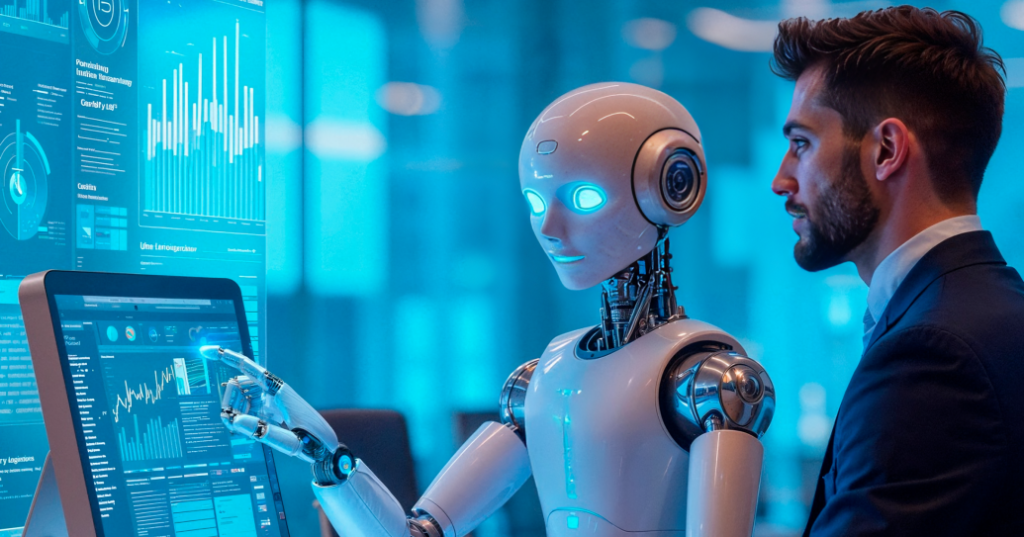
3. The Human-AI Hybrid Managers: The workplace of tomorrow will be a collaboration zone. We will see the rise of AI Integration Managers who oversee the implementation of AI tools within teams and workflows. Hybrid Job Roles will become the norm: a marketing manager who uses AI for analytics but applies human creativity for strategy; a surgeon who operates alongside AI diagnostic assistants; a teacher who uses AI for personalized learning plans but focuses on mentorship and social-emotional learning.
4. The Uniquely Human-Centric Roles: In an AI-saturated world, what is inherently human becomes supremely valuable. Jobs emphasizing empathy, complex creativity, and high-stakes interpersonal relationships will not only persist but likely see increased demand. This includes mental health professionals, elder care specialists, skilled tradespeople in unpredictable environments (like expert plumbers or electricians), artists and storytellers who push conceptual boundaries, and strategists & negotiators who navigate ambiguous human dynamics.
Navigating the Transition: The Imperative for Adaptation
The central challenge of this transition is the potential skills gap. The workforce losing roles in data entry is not the same workforce that can immediately retrain as machine learning engineers. Therefore, the responsibility for adaptation is threefold:
- For Individuals: Lifelong learning is no longer a cliché but an economic imperative. The focus must shift from acquiring static knowledge to cultivating meta-skills: critical thinking, complex problem-solving, creativity, emotional intelligence, and, above all, adaptability. The ability to work symbiotically with AI—using it as a tool to augment one’s capabilities—will be the defining professional skill of the coming decade.
- For Educators: Academic institutions must overhaul curricula to emphasize STEM fundamentals alongside ethics, philosophy, and communication. Vocational training needs to pivot towards maintaining and programming automated systems, not just operating them.
- For Policymakers: Governments must invest in large-scale, accessible reskilling programs and consider social safety nets, like enhanced unemployment benefits or even concepts like universal basic income, to cushion the disruptive transition for displaced workers.
Conclusion: Collaboration, Not Replacement
The narrative of AI as a mere job-killer is simplistic and misleading. History shows that technological revolutions ultimately create more jobs than they destroy, but they are different jobs. The rise of AI will eliminate many tasks we find tedious, freeing human potential to focus on what we do best: dreaming, creating, empathizing, and leading. The future belongs not to humans or AI in isolation, but to the collaborative partnerships we forge. The goal is not to compete with artificial intelligence, but to use it to amplify our own distinctly human intelligence. The great reshuffle will be disruptive and demanding, but by embracing adaptation, it can lead us to a more innovative, efficient, and ultimately more human-centered economy.