

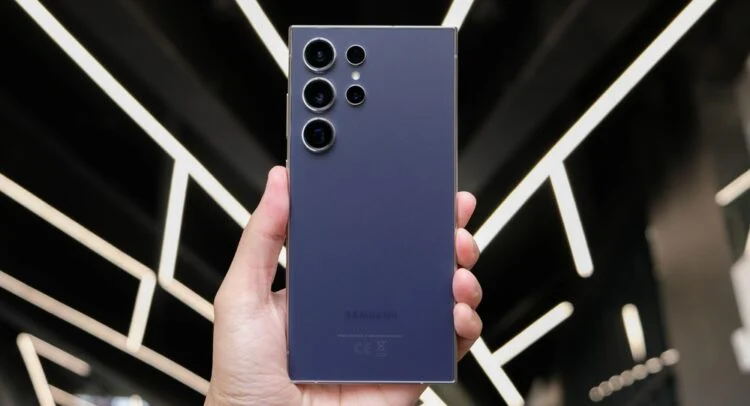
As the smartphone industry marches inexorably forward, all eyes periodically turn to Suwon, South Korea, where Samsung sets the tempo. While official details remain shrouded in the customary veil of secrecy, the contours of the Samsung Galaxy S26 series are beginning to emerge from the realm of speculation, painting a picture of a device that aims not just to iterate, but to intelligently evolve. Expected in early 2025, the S26 isn’t merely a new model; it represents the next strategic move in Samsung’s enduring quest to redefine the flagship experience.
The Design Philosophy: Refinement and Resilience
If the S24 series championed a sleek, monolithic aesthetic and the S25 is anticipated to refine it, the S26 will likely push further into the territory of seamless integration and durability. We can expect a continuation of the flat, armor-aluminum frame, possibly with even more pronounced chamfers or a new texture for improved grip. The true evolution, however, will lie in the display and build.
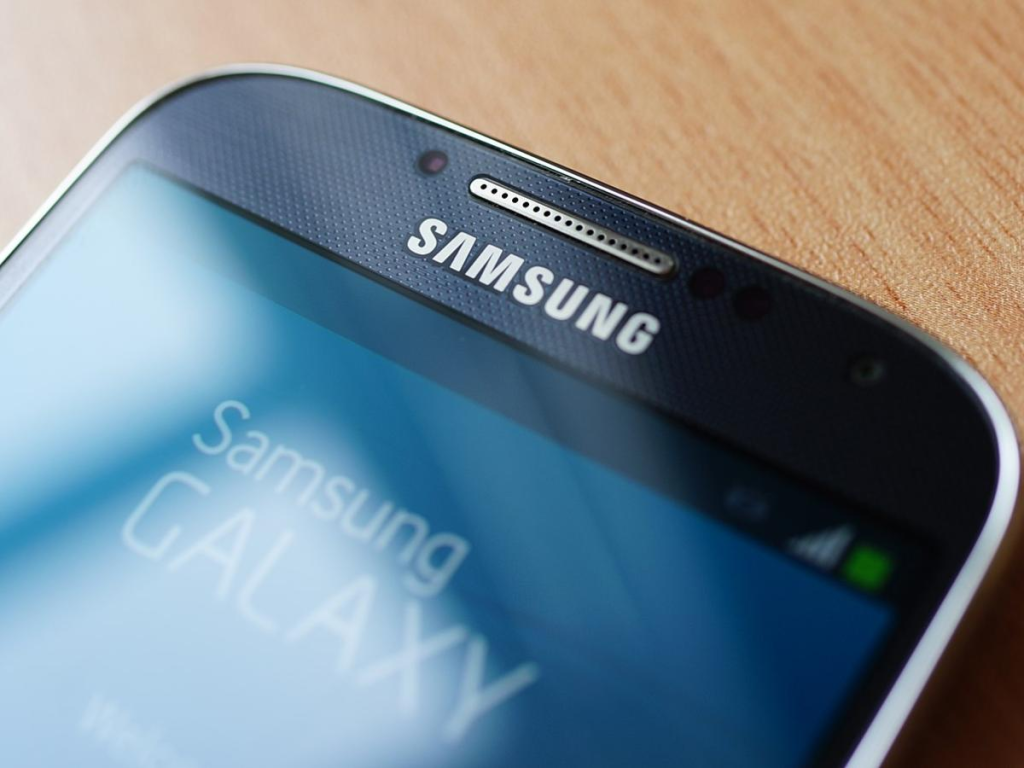
The Dynamic AMOLED 2X panel will undoubtedly see incremental boosts in peak brightness, color accuracy, and efficiency. But the headline might be further advancements in under-display technology. The goal? To make the front-facing camera truly invisible during use, finally achieving a completely uninterrupted “Infinity-O” display. Coupled with a new iteration of Corning Gorilla Glass—perhaps Victus 4 or higher—the S26 promises to be a device that is as stunning to look at as it is tough to damage.
The Engine Room: Performance and the AI Revolution
The heart of the Galaxy S26 will almost certainly be a chipset defined by two key attributes: raw power and pervasive artificial intelligence. In most regions, this will manifest as the Snapdragon 8 Gen 4 (or its eventual successor), built on an advanced 3nm or smaller process node. This promises significant gains in CPU and GPU performance, with a major focus on energy efficiency to manage thermals and battery life.
However, the true differentiator will be Galaxy AI 2.0. Samsung has firmly planted its flag in on-device AI, and the S26 will be its most sophisticated vessel yet. We can move beyond the current suite of translation, summarization, and photo-editing tools. Imagine:
- Proactive AI: A system that learns your daily patterns and contextually pre-loads apps or information you need, truly anticipating your actions.
- Generative Media Creation: More advanced, real-time video and image generation and editing, allowing users to manipulate scenes or create content from text prompts directly on the device.
- Hyper-Personalized Assistant: Bixby, reborn with a large language model (LLM) at its core, could become a genuinely intuitive, multi-modal companion capable of complex, cross-application tasks.
This AI won’t just be a suite of features; it will be the invisible framework that makes the entire device feel faster, smarter, and more personal.
The Camera: Computational Photography Reimagined
Samsung’s camera hardware is always top-tier, but the S26’s leap will be defined by software and sensor synergy. We can anticipate a refined 200MP main sensor with larger pixels for phenomenal light capture, coupled with an ultra-wide and a tetraprism telephoto lens offering sharper, more stable zoom at greater distances—potentially pushing beyond the 10x optical range.
The magic, however, will happen in the Neural Processing Unit (NPU). AI will drive near-magical computational photography:
- Real-Time Scene Synthesis: The ability to perfectly remove or alter moving objects in a video as you record.
- Advanced Low-Light Fusion: Stitching multiple frames from different lenses simultaneously for unprecedented night-mode detail and dynamic range.
- Professional-Grade AI Tools: Automated, studio-level color grading for video, or AI-powered suggestions for composition and settings based on the scene.
The camera will cease to be just a tool for capture and become a creative studio powered by silicon and algorithms.
Ecosystem and Sustainability: The Bigger Picture
The Galaxy S26 will not exist in a vacuum. Its launch will be a centerpiece for Samsung’s deepening ecosystem integration. Enhanced, seamless connectivity with the Galaxy Book, Tab S10, Galaxy Watch, and Buds will be a given. We may see the realization of Samsung’s “One UI” vision, where tasks can be started on one device and fluidly finished on another, with the S26 acting as the central, intelligent hub.
Furthermore, sustainability will move from a talking point to a core design pillar. Expect a significant increase in the use of recycled materials—not just in the packaging, but in the phone’s frame, internal components, and even the glass. Samsung will likely announce ambitious new circular economy goals alongside the S26, framing it as a device built for the future in every sense.
The Challenge and The Promise
The Galaxy S26’s path is not without obstacles. It must justify its premium in an increasingly saturated market, differentiate meaningfully from its predecessor and competitors like Apple, and prove that its AI features are daily necessities, not fleeting gimmicks. Battery technology remains a universal constraint, so any major leap in capacity or charging speed would be a monumental win.
Yet, the promise is immense. The Galaxy S26 represents the convergence of several technological vectors: nanometer-scale chip fabrication, transformative AI models, and advanced material science. It has the potential to be the phone that makes on-device AI feel indispensable, that blurs the line between communication tool and creative partner, and that sets a new standard for what a sustainable flagship can be.
In conclusion, while the Samsung Galaxy S26 remains a silhouette on the horizon, its projected features suggest a device focused on intelligent evolution. It won’t be about a single revolutionary feature, but about a holistic, AI-powered refinement of the entire user experience—making the complex simple, the ordinary extraordinary, and solidifying Samsung’s place at the forefront of mobile innovation for another year. The countdown to the next chapter begins.