

From clunky prototypes to sleek, indispensable companions, the tablet has undergone a remarkable transformation. It sits in the sweet spot between the raw power of a laptop and the intimate convenience of a smartphone, carving out a unique and enduring niche in our digital ecosystem. To call it merely a “big phone” or a “weak computer” is to miss the point entirely. The modern tablet is a versatile portal for work, creativity, entertainment, and connection—a testament to technological convergence that has quietly reshaped how we interact with the digital world.
The journey began in earnest with Apple’s introduction of the iPad in 2010. Steve Jobs positioned it as a “third category” of device, and while skeptics abounded, the intuition was profound. Early tablets capitalized on the intuitive, direct-touch interaction perfected by smartphones, but on a canvas large enough to feel immersive. They were, initially, phenomenal consumption devices: perfect for reading articles, watching movies, browsing the web, and casual gaming. The keyboard and mouse were deliberately sidelined, inviting a more relaxed, lean-back experience.
However, stagnation as a passive screen was never the endgame. The true revolution of the tablet has been its relentless push toward proactivity—transforming from a window you look into, to a tool you create with. This shift has been powered by two critical developments: hardware prowess and software ambition.
Modern tablets are engineering marvels. Apple’s M-series chips, originally designed for MacBooks, now power iPads, granting them desktop-class performance. Similarly, high-end Android and Windows tablets boast processors that handle multitasking and complex applications with ease. Displays are another battleground, with mini-LED and OLED screens offering stunning color accuracy, deep blacks, and high refresh rates that make every scroll and stylus stroke fluid and responsive. This hardware is no longer just for rendering video; it’s for rendering 3D models, editing multi-layer 4K video, and running sophisticated digital audio workstations.
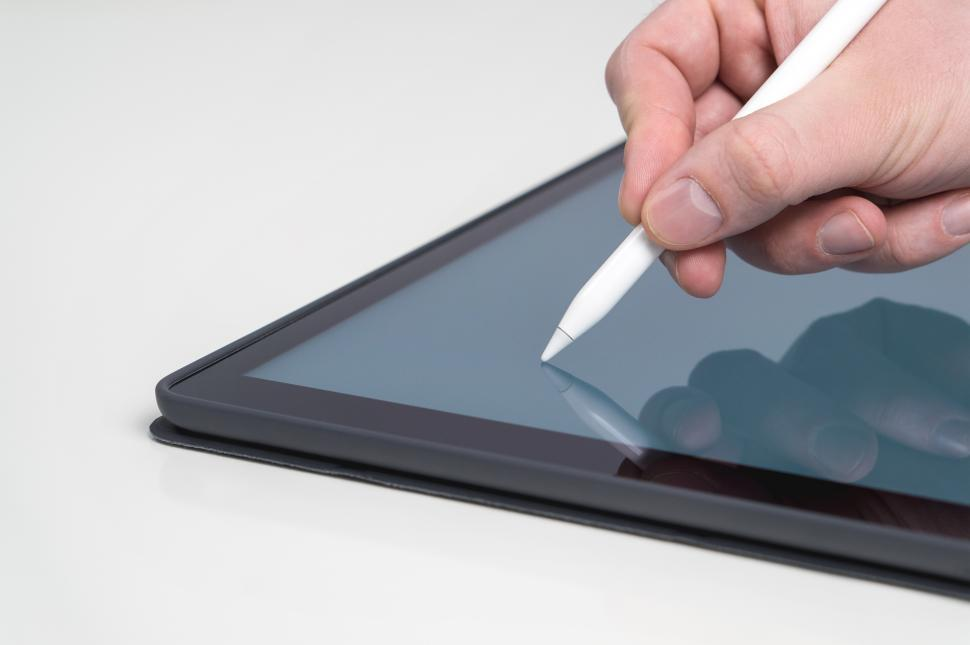
The hardware, however, would be lifeless without the software and accessories that unlock its potential. The rise of the active stylus—like the Apple Pencil, Samsung’s S-Pen, or Microsoft’s Surface Pen—has been a game-changer. It has made the tablet the digital successor to the paper sketchpad, the notebook, and the textbook. Artists illustrate and animate with precision. Students annotate PDFs and solve equations by hand, their notes automatically digitized and searchable. Professionals mark up architectural plans and sign documents with a natural feel. The stylus returned the act of creation to our most intuitive tool: our hands.
Likewise, the evolution of detachable keyboards and sophisticated trackpads has bridged the gap to the laptop. When paired with robust software, this transforms the tablet into a credible hybrid device. Apple’s Stage Manager, Android’s improved multitasking, and Microsoft’s innate Windows integration on Surface tablets allow users to fluidly shift between touch-first apps and traditional productivity tasks. You can draft an email on the keyboard, sketch a diagram with the stylus, and then drag both elements into a presentation—all on the same device, without switching machines.
This versatility has cemented the tablet’s role across diverse demographics. In education, tablets are interactive textbooks and portable science labs, offering personalized learning and boundless resources. In enterprise, they are point-of-sale systems, inventory managers, and digital clipboards for fieldwork, prized for their portability and durability. In the creative industries, they are indispensable studios for digital painting, music production, and video editing on the go. And in the home, they are the family command center—a recipe book in the kitchen, a remote control for smart devices, and a video-calling portal to grandparents.
Yet, challenges persist. The “identity crisis” lingers in software. While iPadOS, Android, and Windows have come far, there are still moments where the user experience feels like a compromise—a mobile app stretched too large, or a desktop program awkwardly navigable by touch. The premium price of high-performance tablets and their accessories also places them as luxury tools for many. Furthermore, the very convenience that makes tablets perfect for leisure can foster endless, passive scrolling, a reminder that the device is a canvas for both creation and consumption.
Looking ahead, the future of the tablet is one of deeper integration and intelligence. We can expect even more seamless handoffs with our other devices, where a project started on a phone can be picked up on a tablet and finalized on a desktop, with data flowing effortlessly. Advances in augmented reality (AR) could turn the tablet’s camera and screen into a window for overlaying digital information onto the physical world, from furniture shopping to interactive learning. Artificial intelligence will likely become a more embedded co-pilot, helping to organize notes, suggest edits to artwork, or translate conversations in real-time.
In conclusion, the tablet has matured from a novel gadget into a foundational piece of personal technology. Its genius lies in its adaptability. It is a chameleon, morphing to fit the need of the moment: a book, a canvas, a workstation, a theater, a classroom. It has democratized aspects of creativity and productivity, putting powerful tools directly into our hands—literally. The tablet is no longer just a device we use; it is a reflection of our multifaceted lives, proving that the most powerful technology is not that which confines us to a single mode of interaction, but that which liberates us to work, play, and create in the ways that feel most human. It is, truly, a lifestyle revolution housed in glass and aluminum.